Why Beginners Should Practice Shadowing with Small Talk Conversations?
Many people start practicing Shadowing with podcasts or speeches, thinking that the more difficult the material, the faster their progress will be. In reality, small talk conversations are the most suitable material if your goal is natural communication.
This type of conversation appears everywhere: meeting colleagues, making new friends, waiting for the elevator, or chatting before a meeting. The content isn't complex, yet it contains many sentence patterns that native speakers use daily.

You'll Learn Phrases That Are Actually Used
Small talk doesn't use academic vocabulary or overly complex structures. Instead, it uses very common, everyday expressions.
For example:
How's your day going?
Been busy lately?
That's good to hear.
I know what you mean.

These are sentences you'll hear over and over again in real-life communication but rarely appear in grammar books.
You Practice Intonation, Not Just Pronunciation
If you only read individual sentences, you might pronounce each word correctly but still sound unnatural.
When Shadowing a small talk conversation, you'll learn how native speakers raise their voice when asking a question, lower it when finishing an idea, and emphasize words that carry key information.
This rhythm is precisely what makes speech sound more natural. After Shadowing multiple times, you'll no longer have to translate each sentence in your head but can respond almost instinctively.
Start with Short Conversations
Don't choose segments that are several minutes long. A conversation of about 20-40 seconds with 5-10 turns is enough to practice many times in one session.
Each time you Shadow, focus on one goal: today practice linking sounds, tomorrow practice intonation, and then work on speed.

Conclusion
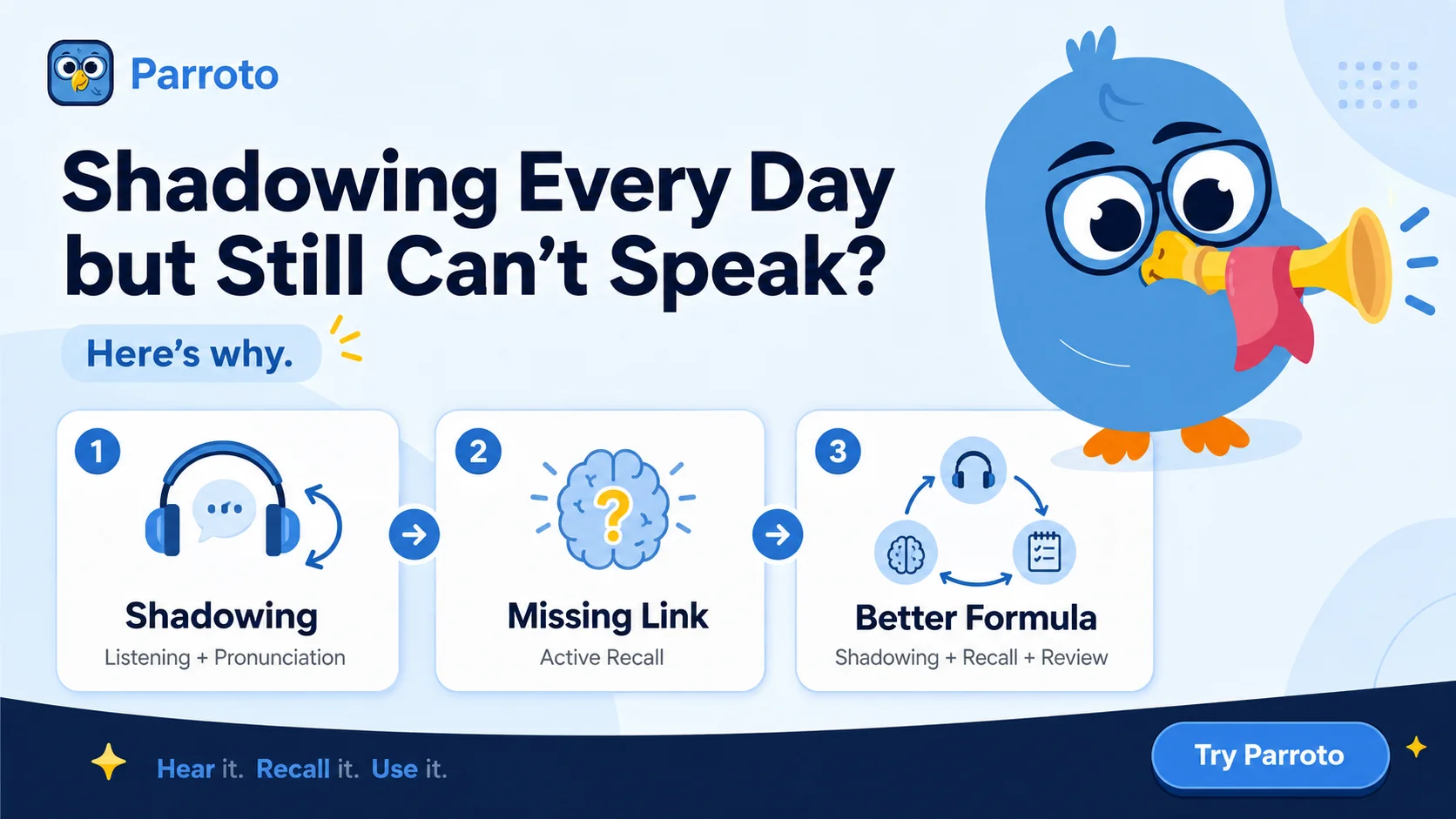
If your goal is communication, start with small conversations instead of academic speeches. They are closer to real-life situations, easy to repeat, and help you build reflexes faster. On Parroto, you can choose Shadowing exercises based on different communication topics to practice listening, imitating, and forming natural speech step-by-step.